
Who Invented the Gym? The History and Evolution of Gyms
The idea of a gym has evolved over thousands of years. The core concept remains the same: a dedicated space for physical training and personal development.
In Greece, the **gymnasium** was more than just a place to work out. It was a center for education, social life, and character building. Young men trained there not only to become stronger but also to prepare for military service and civic duty. The Greeks believed that a healthy body supported a mind. This philosophy helped shape the foundations of physical training.
Today’s gyms are very different in looks and function. They are filled with machines, digital tools, and specialized equipment. People go to gyms for fitness goals like losing weight, building muscle,e improving cardiovascular health,th or staying active. There is also a focus on personal training, group classes, and technology that tracks progress.
Despite all the changes, the spirit of the gym hasn’t faded. Whether it was in Greece or a 21st-century fitness center, people have always come together to improve their bodies and minds. The gym is not about exercise—it’s about growth, discipline, and pushing limits.
So when we ask who invented the gym,m the answer isn’t one person. It’s a journey through history. From philosophers and Roman soldiers to Indian wrestlers and German gymnasts, it’s many cultures that contributed to the idea of training in a special place.
The gym as we know it today is the result of centuries of tradition, innovation, and human desire to be healthier and stronger. That journey continues—because the need to move, train, run, and grow is still alive in all of us.
| Ancient Gymnasium | Modern Gym |
| ——————- | ————————————– |
Running areas | Treadmills and tracks |
| Wrestling | Strength and combat sports training |
| Throwing exercises | Specialized strength equipment |
| Bodyweight training | Bodyweight and resistance workouts |
| Athletic training | General fitness and sports training |
| Physical education | Personal training and fitness programs |
| Outdoor/open spaces | Indoor fitness facilities |
The biggest difference is technology.
Ancient athletes relied heavily on their bodies and simple training tools. Modern gym members can choose from hundreds of machines and pieces of equipment.
## The Future of Gyms
The gym industry continues to change.
Technology is making workouts more personalized. Wearable devices can monitor heart rate, movement,ment and activity levels. Digital fitness platforms allow people to exercise at home or follow programs.
Artificial intelligence and connected equipment may also make workout tracking and program customization more convenient. However, the basic purpose of the gym remains similar to what it was thousands of years ago: **helping people develop and maintain physical fitness.**
##
So **who invented the gym?**
The answer is that no single person invented it.
The idea of a place for physical training developed over a very long period. Ancient Greece played a role through the development of gymnasiums, where people trained physically and participated in education and social activities. Other cultures, including Rome and India, developed their own rich traditions of exercise and strength training.
Over the centuries, these traditions evolved into physical culture, bodybuilding, weight training, health clubs,s and commercial gyms. Today’s gym—with its dumbbells, barbells, treadmills, machines, trainers a, nd digital technology s ishe result of thousands of years of experimentation and cultural development.
The equipment may have changed. The basic idea remains remarkably similar: **train your body, improve your physical abilities, and make fitness part of your lifestyle.
notes
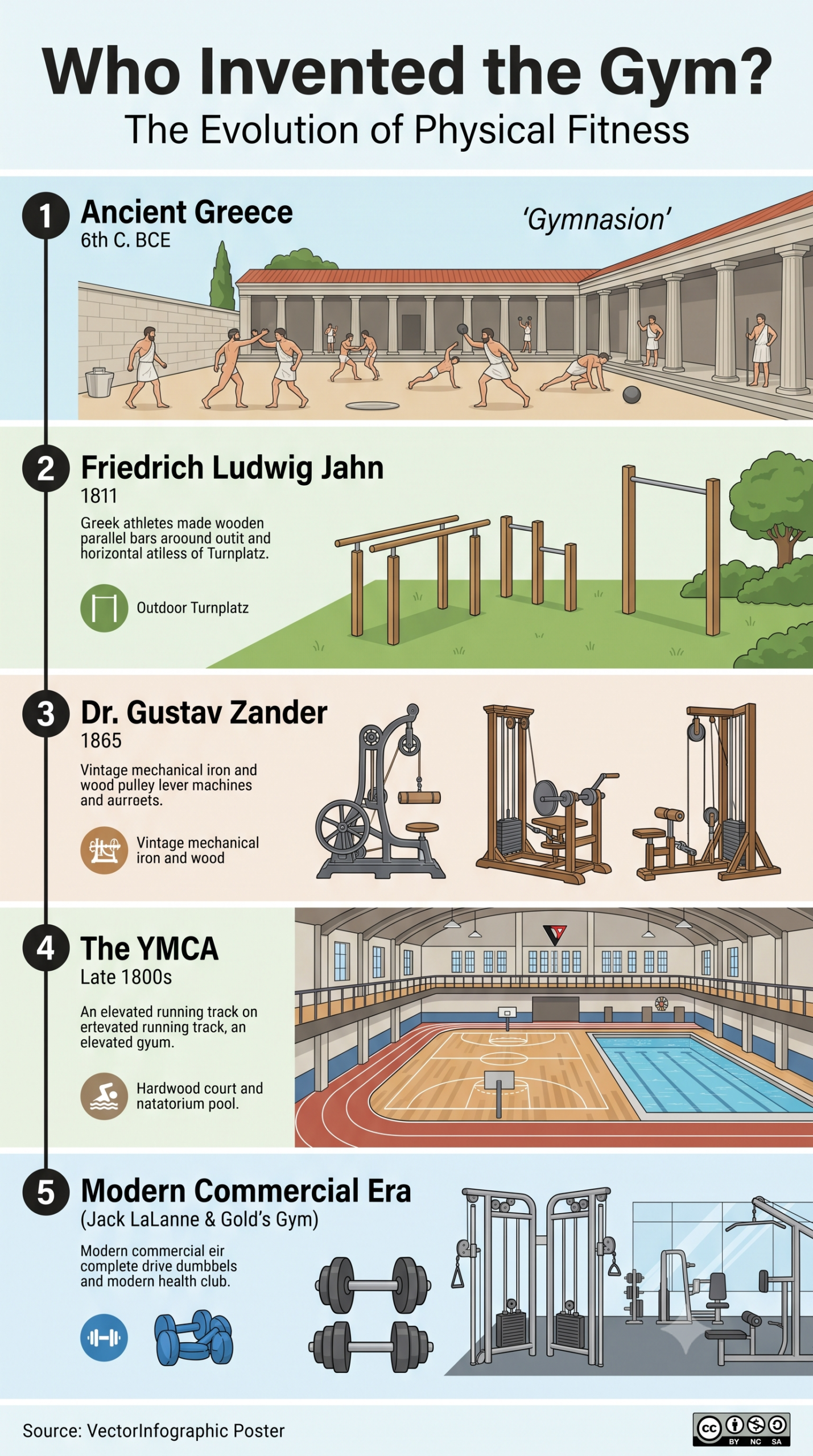
Ancient Greece (6th C. BCE): Created the first open-air gymnasia for wrestling and fitness.
Friedrich Jahn (1811): Invented parallel bars and horizontal high bars.
Dr. Gustav Zander (1865): Built the first weight-and-pulley workout machines.
The YMCA (Late 1800s): Introduced modern indoor centers with tracks and pools.
LaLanne & Gold (1936–1965): Launched commercial health clubs and global iron culture.