
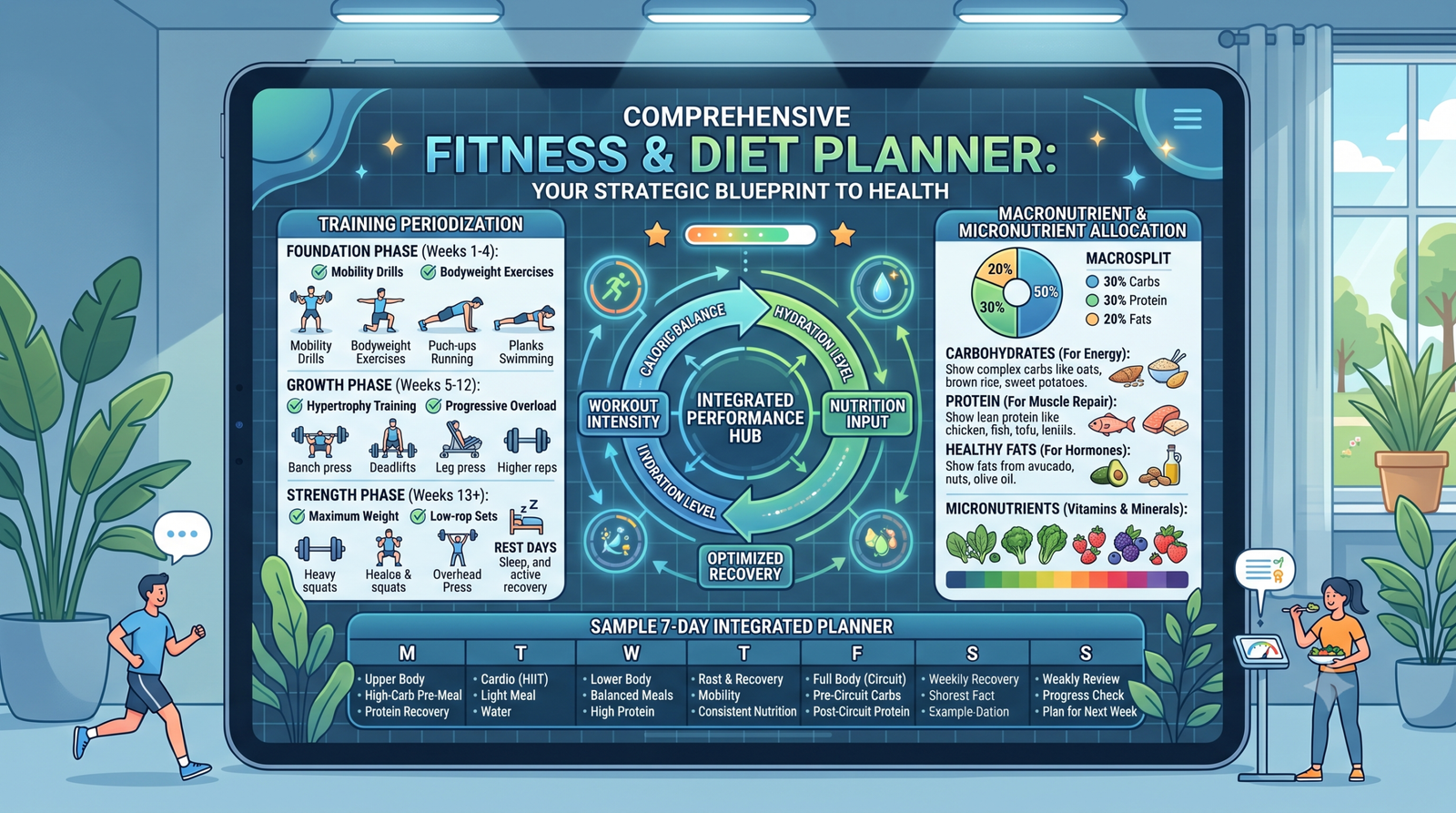
Fitness & Diet Planner: Your Simple Guide to a Healthier Lifestyle
Starting on a fitness journey feels easier when you have a plan. A good fitness and diet planner helps you organize your workouts, improve your eating habits, stay consistent,nt and work toward your health and fitness goals.
Whether you want to lose weight,ght build muscle, increase strength, boost energy, or just live better, the right mix of exercise and nutrition can make a difference in how you feel every day.
## What Is a Fitness & Diet Planner?
A fitness and diet planner is a system that organizes your workouts, meals, water intake, sleep, and daily habits. Instead of exercising randomly or following a strict diet, you can create a routine that fits your lifestyle.
Your plan should include:
– Workout goals
– Balanced meals
– Healthy snacks
– Daily water intake
– Rest and recovery
– Sleep schedule
– Progress tracking
The goal is not perfection. The goal is consistency.
## Why Fitness and Diet Should Work Together
Exercise and nutrition go together like two sides of the coin. Regular physical activity helps build strength, endurance, mobility,y and overall fitness. Good food gives your body the energy and nutrients it needs to perform.
A balanced approach includes vegetables, fruits, whole grains, protein-rich foods, healthy fats,s and plenty of fluids. Everyone’s nutrition needs are different based on age, activity level, body size, and personal goals. Instead of chasing quick results, focus on building habits that last. Small changes over time lead to improvements.
## Simple Weekly Fitness Planner
A weekly workout schedule keeps things organized without making exercise feel too heavy or overwhelming.
### Monday – Full-Body Strength
Focus on exercises like squats, push-ups, rows, lunges,s and core moves. Beginners can start with resistance and fewer reps.
### Tuesday – Cardio
Pick an activity you enjoy—walking, cycling, jogging, swimming, or dancing. Movement should feel fun,n not forced.
### Wednesday – Recovery
Give your body a break. Light walking, stretching or mobility routines help muscles recover and prevent injury.
### Thursday – Strength Training
Work on muscle groups using exercises that match your fitness level. Focus on control, form, and steady movement.
### Friday – Cardio & Core
Blend cardio with core exercises—planks, dead bugs, or slow leg raises. This adds variety while keeping you strong.
### Saturday – Active Lifestyle
Choose something like hiking, sports, biking,g or a long walk. Make it enjoyable and part of your routine.
### Sunday – Rest
Rest is not laziness. It’s a part of staying healthy and preventing burnout. Use this day to recharge.
## Simple Diet Planner
Healthy eating doesn’t have to be complicated. Build your meals around nutritious foods and keep them balanced.
### Breakfast
Start your day with a meal that has protein, carbs, and fruit or vegetables.
Examples include:
– Oatmeal with fruit and nuts
– Eggs with whole-grain toast and veggies
– Yogurt with fruit and seeds
– Vegetable poha with a protein side
### Lunch
Make your lunch a mix of vegetables, protein, and whole grains or other carbs.
Examples include:
– Rice, dal, vegetables and curd
– Roti with vegetables and paneer
– Grilled chicken with rice and salad
– Chickpea salad with grains
### Healthy Snacks
Snacks should keep you full between meals and support your energy levels.
Some options:
– Fruit
– Nuts and seeds
– Yogurt
– Roasted chickpeas
– Veggie sticks
– Homemade smoothies
### Dinner
Keep dinner balanced. Choose portions that match your energy needs.
For example: combine vegetables with dal, beans, paneer, eggs, fish, chicken,n or another protein source along with rice, roti, ti or another carb.
## Hydration Matters
Water is one of the important parts of a healthy lifestyle. How much fluid you need depends on your activity level, weather, and individual needs.
Keep water close by all day. Drink regularly during and after workouts.
## Track Your Progress
Recording what you do helps you see what works and what doesn’t.
You can track:
– Workouts completed
– Steps or daily activity
– Meals eaten
– Water intake
– Sleep quality and duration
– Body measurements
– Improvements in strength or endurance
– Energy levels
Progress isn’t always about the number on the scale. Gains in strength, stamina, flexibility, confidence,e and daily energy are just as meaningful.
## Tips for Staying Consistent
### 1. Start Small
You don’t need to change everything at once. Begin with habits and grow from there.
### 2. Set Realistic Goals
Create goals that match your fitness level and life situation. You’re more likely to stick with them.
### 3. Plan Your Meals
Prepare meals or ingredients in advance. This makes healthy choices easier when you’re short on time.
### 4. Make Exercise Enjoyable
Choose activities you actually like. When workouts feel fun, you’ll stay with them longer.
### 5. Prioritize Recovery. Rest days, ay sleep s l,e ep and recovery are not optional. They help your body adapt and get stronger.
### 6. Stay Flexible
Missing one workout or having an unplanned treat doesn’t ruin your plan. Just get back to your routine. Keep going.
## Your Fitness & Diet Planner Checklist
Use this checklist every day:
– ☐ Complete your planned workout or physical activity
– ☐ Eat balanced meals
– ☐ Include fruits and vegetables
– ☐ Drink water regularly
– ☐ Get protein and essential nutrients
– ☐ Take time to recover
– ☐ Get adequate sleep
– ☐ Track your progress
– ☐ Stay consistent
## Final Thoughts
A successful fitness journey happens through small steady steps—not big extreme changes. A fitness and diet planner gives you structure while letting you adjust for your life.
Focus on movement, balanced food, rest, and realistic goals. Start where you are, improve slowly,y and give yourself time to build habits that last.
**TheFitGrow.com** is here to help you make fitness healthier and easier to understand—one step at a time.
1 Comment
[…] Your fitness journey doesn’t need to be complicated. Start where you are, stay consistent, and keep improving one healthy habit at a time. […]